Iconic Hungarian Director and Master of Introspective Cinema Béla Tarr Dies at 70
zita kisgergely
Béla Tarr passed away last Tuesday at the age of 70 after a long and serious illness, leaving behind an idiosyncratic body of work that made him one of the most deeply respected art-house directors in the world.
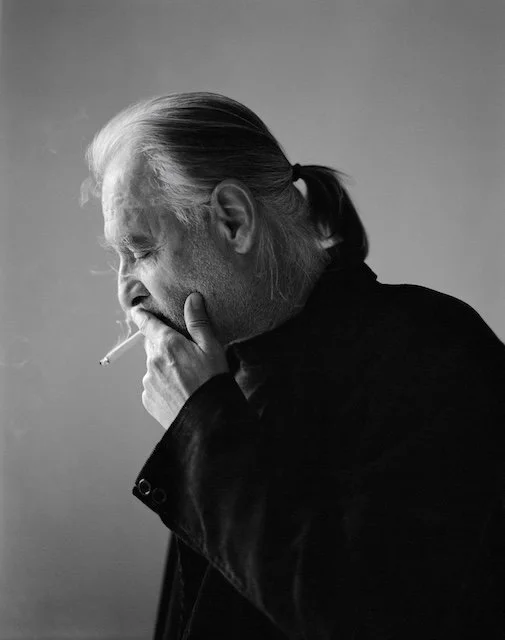
Béla Tarr. Photo via Wikipedia.
Known for their stark, visual style, Tarr’s black and white films are famous for their unhurried pacing. Focussing on details and atmospheric moments rather than the usual conventions of plot, Tarr explored existential themes, often using single-take shots which lasted several minutes. This enabled the audience to experience the worlds on the screen more authentically, rather than by having their emotions manipulated via traditional story devices. The Hollywood Reporter noted that, although Tarr’s films were never successful commercially, they contributed significantly to art house cinema.
Tarr’s subject matter usually involved ordinary people doing ordinary things. His films are a moving canvas that deal with people living marginalized or bleak lives. Often working with non-professional actors, Tarr’s most famous film–and one that founded the contemporary slow cinema movement–SÁTÁNTANGO (1994) runs at over seven hours. Depicting the human condition after the collapse of communism in Eastern Europe, the film is based on László Krasznahorkai’s novel of the same name. Krasznahorkai, who won the Nobel Prize for Literature in 2025, was a Hungarian author Tarr often collaborated with.
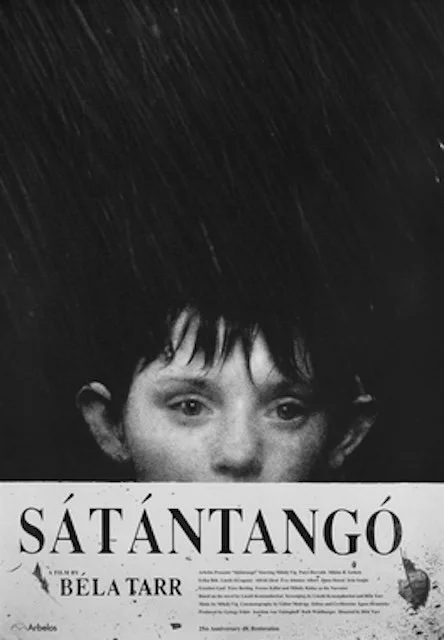
Film poster via Wikipedia.
Born in Pécs, Hungary, in 1955, Tarr grew up in Budapest where both his parents worked in the film and theatre industries. Tarr’s interest in film was sparked at the age of 14 when his father gave him an 8 mm camera. He started working at Balázs Béla Stúdió at the age of 16 and debuted as a director in 1979 with his first film FAMILY NEST, which won the Grand Prix at the Mannheim Film Festival.
After his own film studio was shut down for political reasons in 1985, Tarr continued to make films independently. The last film he directed was THE TURIN HORSE which premiered at the Berlin Film Festival in 2011 and won the Grand Jury Prize. Tarr told The Hollywood Reporter:
“I don’t want to be a stupid filmmaker who is just repeating himself and doing the same shit just to bore the people”
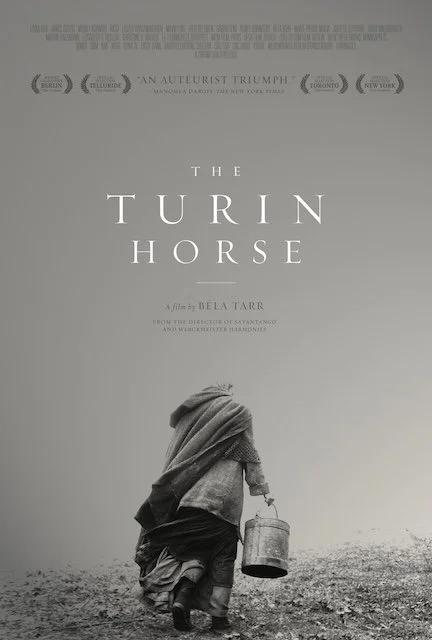
Film poster via Imdb
The rest of Tarr’s career was devoted to training film makers and developing new methods of filmmaking. To this end, he established an international film school (film.factory) in Sarajevo in 2012.
Sources & further information
Flatpack Films has years of experience servicing international brands, agencies, and production companies. Filming in Hungary is easy when relying on their knowledge of the market and ability to solve complex needs. They bring the best that Hungary has to offer in terms of unique locations, exceptionally skilled crews, top-of-the-line equipment and technical solutions. Backed by an impeccable track record, Flatpack Films has worked with world-class clients including Samsung, Samsonite, Toyota, Braun, Chivas Regal and many more.
Get in touch and learn more about Budapest film locations, Hungarian film incentives, film tax credits in Hungary and how Flatpack Films can bring your project to life through a highly bespoke approach.