Location Scout in Budapest: The Eclectic Wonder of Vajdahunyad Castle
zita kisgergely
This fairytale castle complex, surrounded by 300 acres of parkland near Budapest’s city centre, has a surprising history.
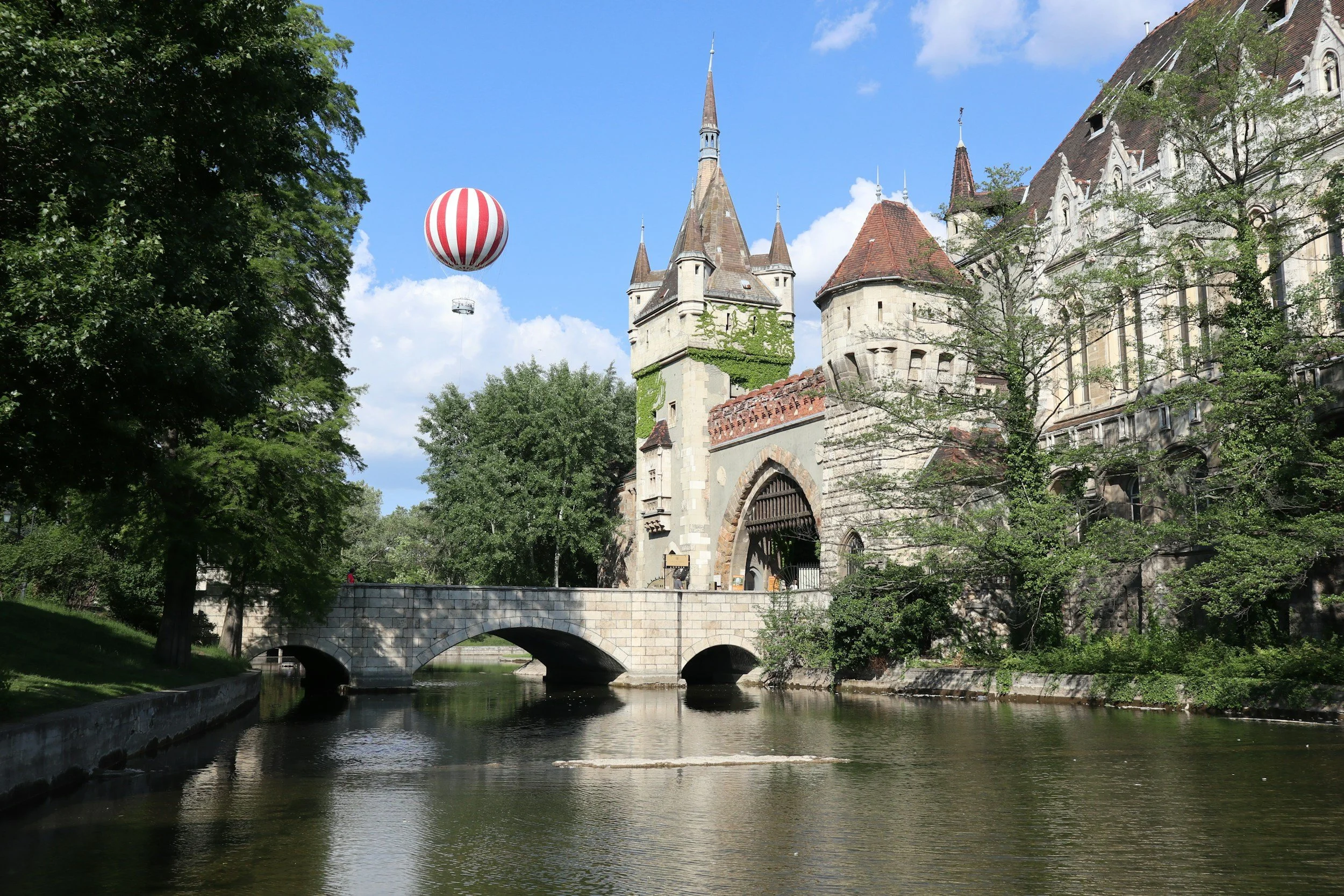
Stock image of Vajdahunyad Castle in Budapest.
Tucked among the leafy expanse of Budapest’s City Park (Városliget), Vajdahunyad Castle is one of Budapest’s most popular sites for locals and tourists alike. But although the building, with its moat, turrets and spires, makes visitors feel like they have stepped backed in time to the middle-ages, the castle isn’t all that it seems.
It’s in fact all a cleverly-constructed illusion which was first unveiled in 1896 as part of Hungary’s Millennial Exhibition to celebrate 1,000 years since the Magyar’s conquest of the Carpathian Basin. Designed by architect Ignác Alpár, the installation was built as a temporary structure from plaster and wood as a kind of homage to some of the architectural gems dotted around the Austro-Hungarian empire. This is why some of the buildings it reflects are now outside the borders of Hungary.
Vajdahunyad castle represents details, to a lesser or greater extent, of 21 buildings. Perhaps it’s this mishmash of architectural styles and epochs that made the site so popular with visitors at the time of the Millennial Exhibition–and remains so today. As a result, the building was rebuilt into a permanent structure using stone, marble and brick between 1904 and 1908.
A Cinematic Blend of Three Major Architectural Styles
The castle’s eclectic style reflects a broad cross-section of Hungarian architectural history. The Romanesque part of the complex is represented by a replica of the portal from the Abbey Church located in Ják near the Austrian border. The original basilica was most probably finished in 1256.
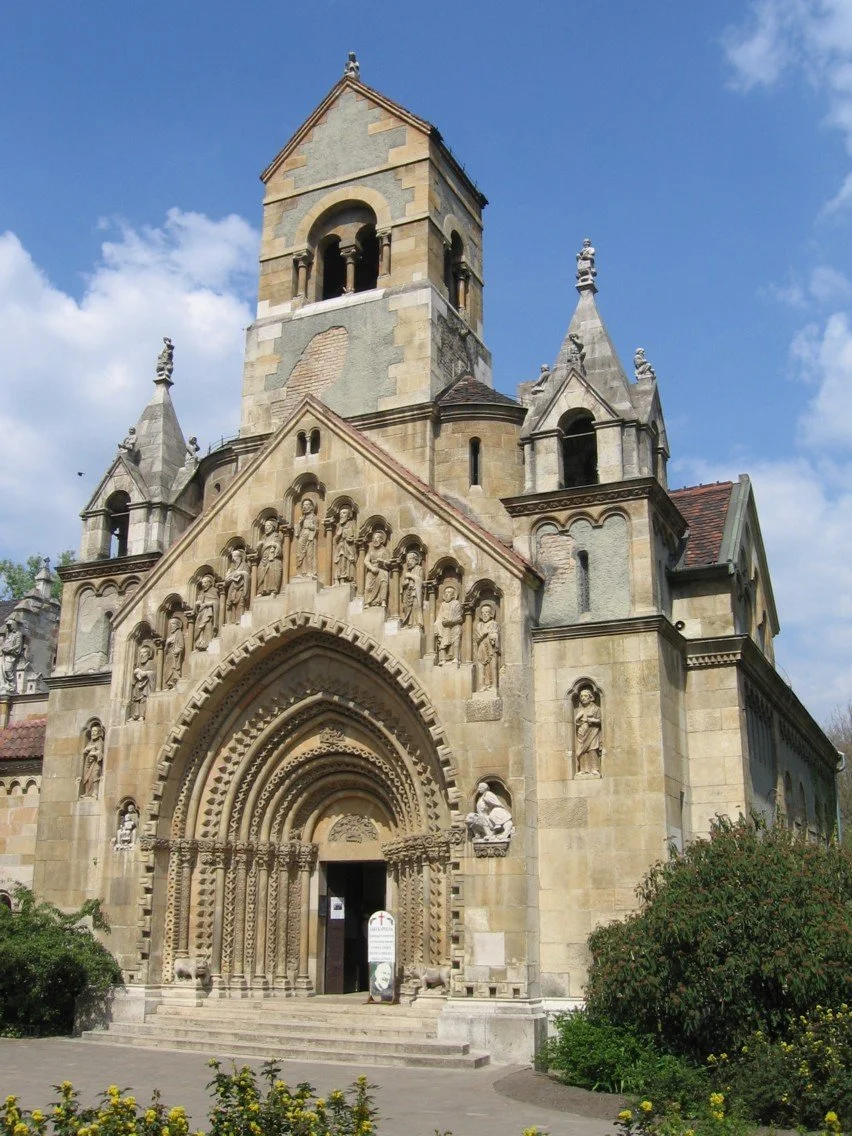
The chapel in Vajdahunyad Castle. Picture via Wikipedia.
The intricately carved entrance to what is a functioning Catholic chapel (also popular for weddings) is decorated with exquisite, geometric Norman-style motifs as well as statues of biblical figures.
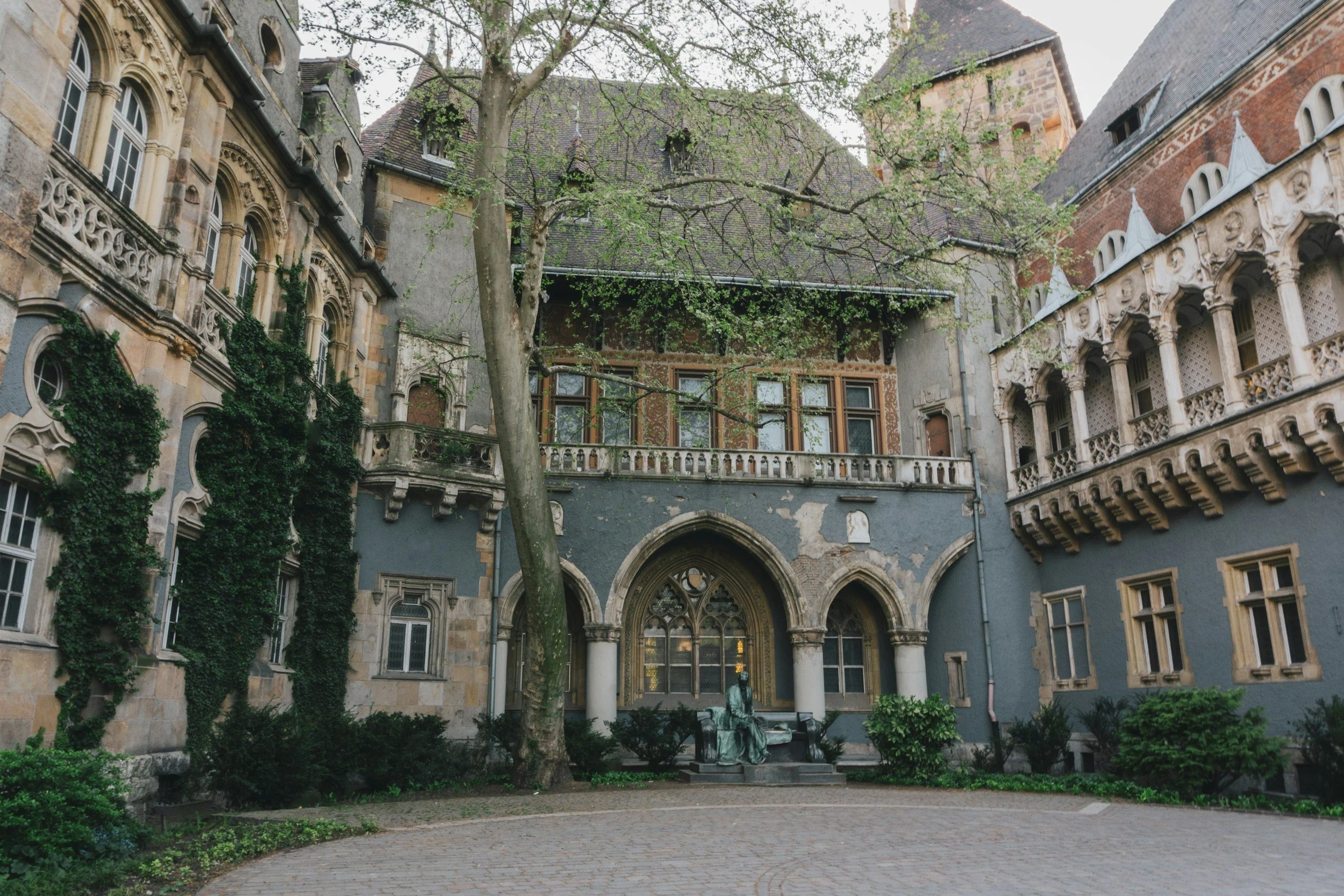
Stock image of Vajdahunyad Castle in Budapest.
The Gothic wing of the castle was inspired by the original 15th century Castle of Vajdahunyad located in Transylvania, which became part of Romania after the Trianon Treaty of 1920. With its elaborate archways, towers and wooden galleries, this section reflects the style of the original castle, and is a visual reminder of its purported associations with Count Dracula.
While the author of the novel, Bram Stoker–by most accounts–never visited this castle in Transylvania, there’s speculation that the character he invented was inspired by Transylvanian Prince, Vlad the Impaler. Also known as Vlad III Dracul of Wallachia, it seems he did in fact spend time imprisoned in the castle. Some say it’s possible that Stoker heard dark tales about this part of the world which shaped his novel, Dracula, published in 1897.
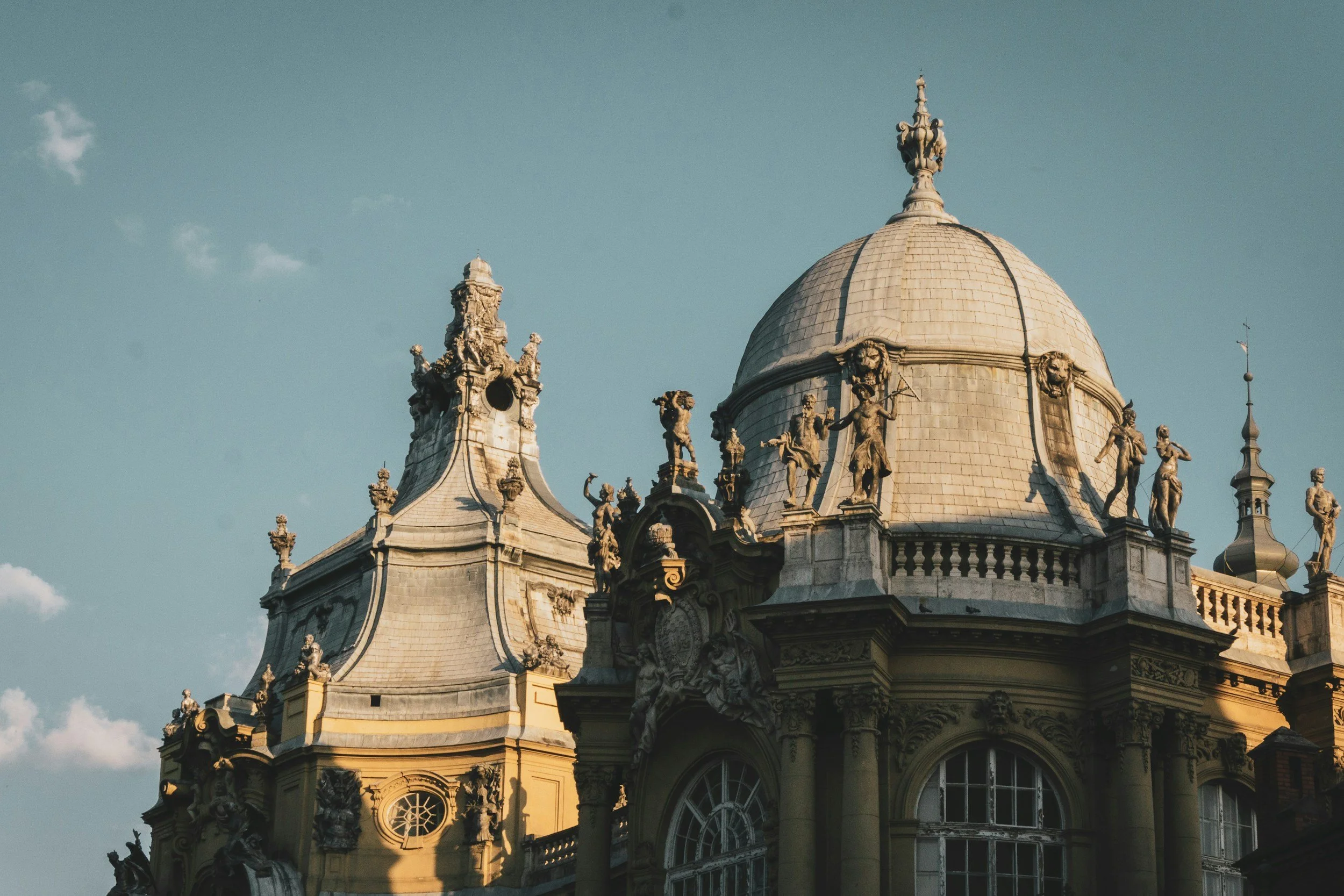
Stock image of Vajdahunyad Castle in Budapest.
The section of the castle housing the Hungarian Agricultural Museum represents the third main architectural style. The Renaissance and Baroque wings, with their domed towers and ornate façades, reflect a palace-like grandeur typically found in the Austro-Hungarian empire of yore.
The complex can be approached via a mock-drawbridge and is surrounded by a shallow moat which extends into the adjacent lake, large enough to accommodate rowing boats. When it turns cold, this area transforms into a huge outdoor ice-skating rink–the biggest open-air one in Europe. With the castle in the background, it becomes a picture postcard of a magical winter wonderland.
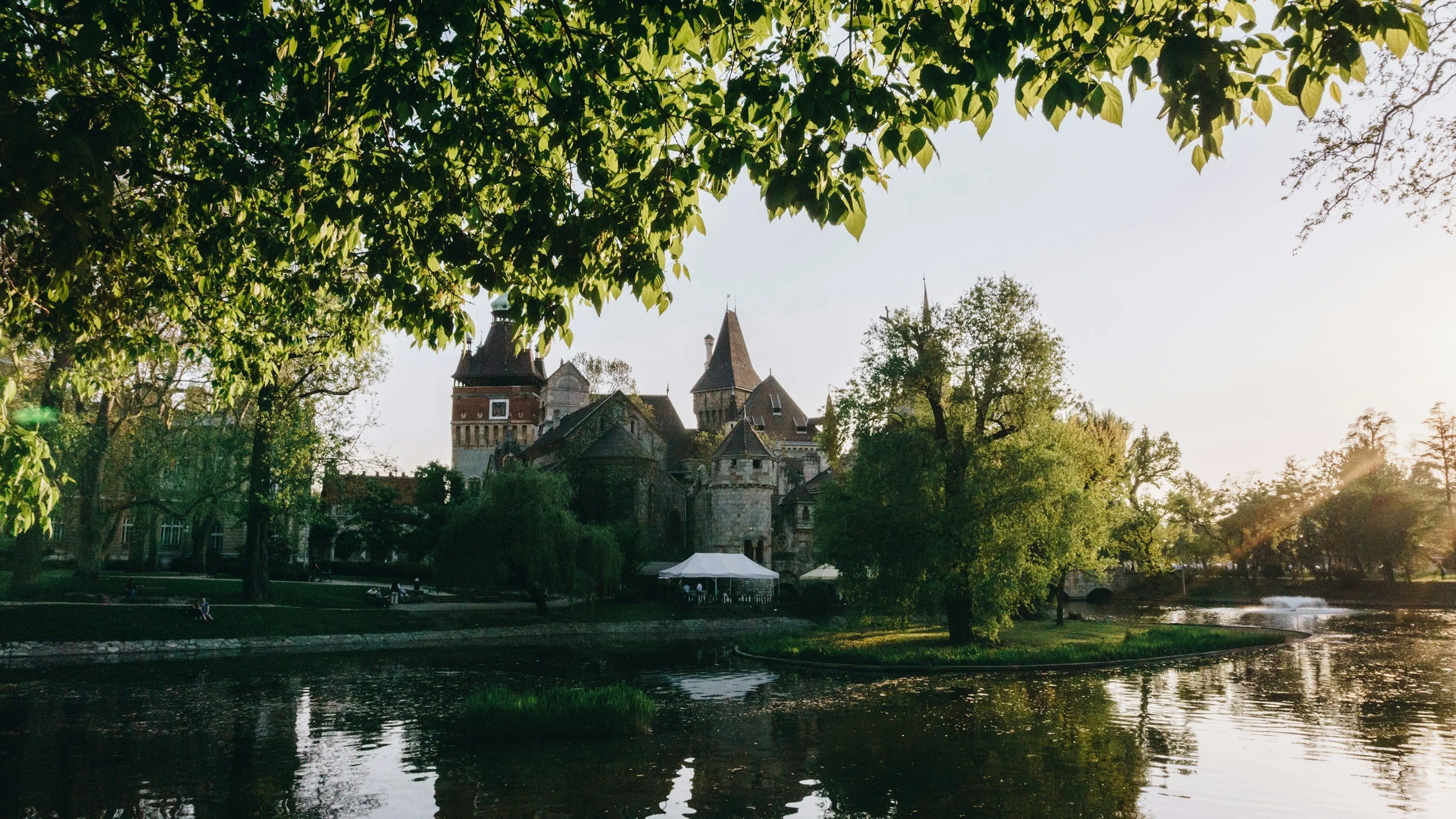
Stock image of Vajdahunyad Castle in Budapest.
Filming in Budapest
Budapest has become one of the major hubs for international productions in Europe thanks to its generous tax rebate, skilled crew and talent, as well as the city’s chameleon-like ability to stand-in for a wide-range of locations. This makes Vajdahunyad Castle, with its atmospheric and eclectic exteriors, adaptable interiors and proximity to central Budapest, a great location choice for period dramas, fantasy sequences or commercial shoots.
Sources & further information
Flatpack Films has years of experience servicing international brands, agencies, and production companies. Filming in Hungary is easy when relying on their knowledge of the market and ability to solve complex needs. They bring the best that Hungary has to offer in terms of unique locations, exceptionally skilled crews, top-of-the-line equipment and technical solutions. Backed by an impeccable track record, Flatpack Films has worked with world-class clients including Samsung, Samsonite, Toyota, Braun, Chivas Regal and many more.
Get in touch and learn more about Budapest film locations, Hungarian film incentives, film tax credits in Hungary and how Flatpack Films can bring your project to life through a highly bespoke approach.