Location Scout: Baroque in Budapest and Beyond
zita kisgergely
Budapest is a city that represents a range of historical eras within its architecture. This has certainly helped make the city – and country as a whole – one of the most popular shooting destinations for film productions from across the world.
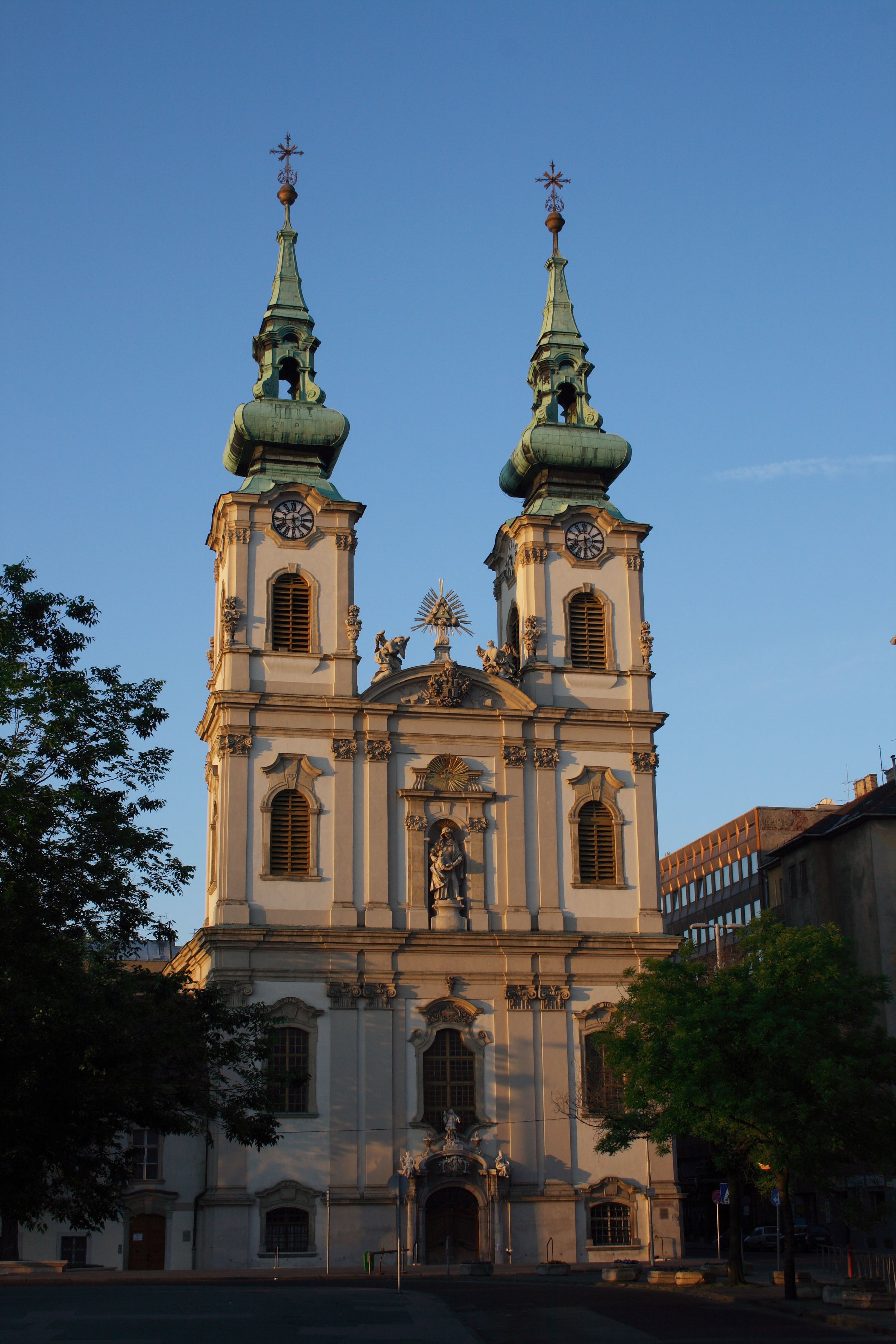
St. Anna Church in Budapest. Photo via Wikipedia.
While there are plenty of examples of neo-renaissance and neo-baroque buildings, we’re looking specifically at ones built during the Baroque period.
Spanning roughly from 1600 to 1750, this era emerged against the backdrop of the fall of the Ottoman Empire. With the Habsburgs keen to cement their rule, Baroque architecture flourished in the country. Styles followed Viennese trends with curved facades, soft pastel hues, ornate rococo details and often featured twin-towers topped with copper domes.
Budapest
A key example of this period is St. Anne’s Church located in Batthyány Square, just over the river from the parliament building. Built in 1762 It’s often cited as one of the best examples of Italian Baroque architecture in the city.
Near the banks of the Danube, the Inner-City Parish Church also sports these signature twin towers. Although it was founded in 1048 – with its earliest features incorporating Romanesque as well as gothic elements – it was restored by the Jesuits in the baroque style following a fire in 1723.
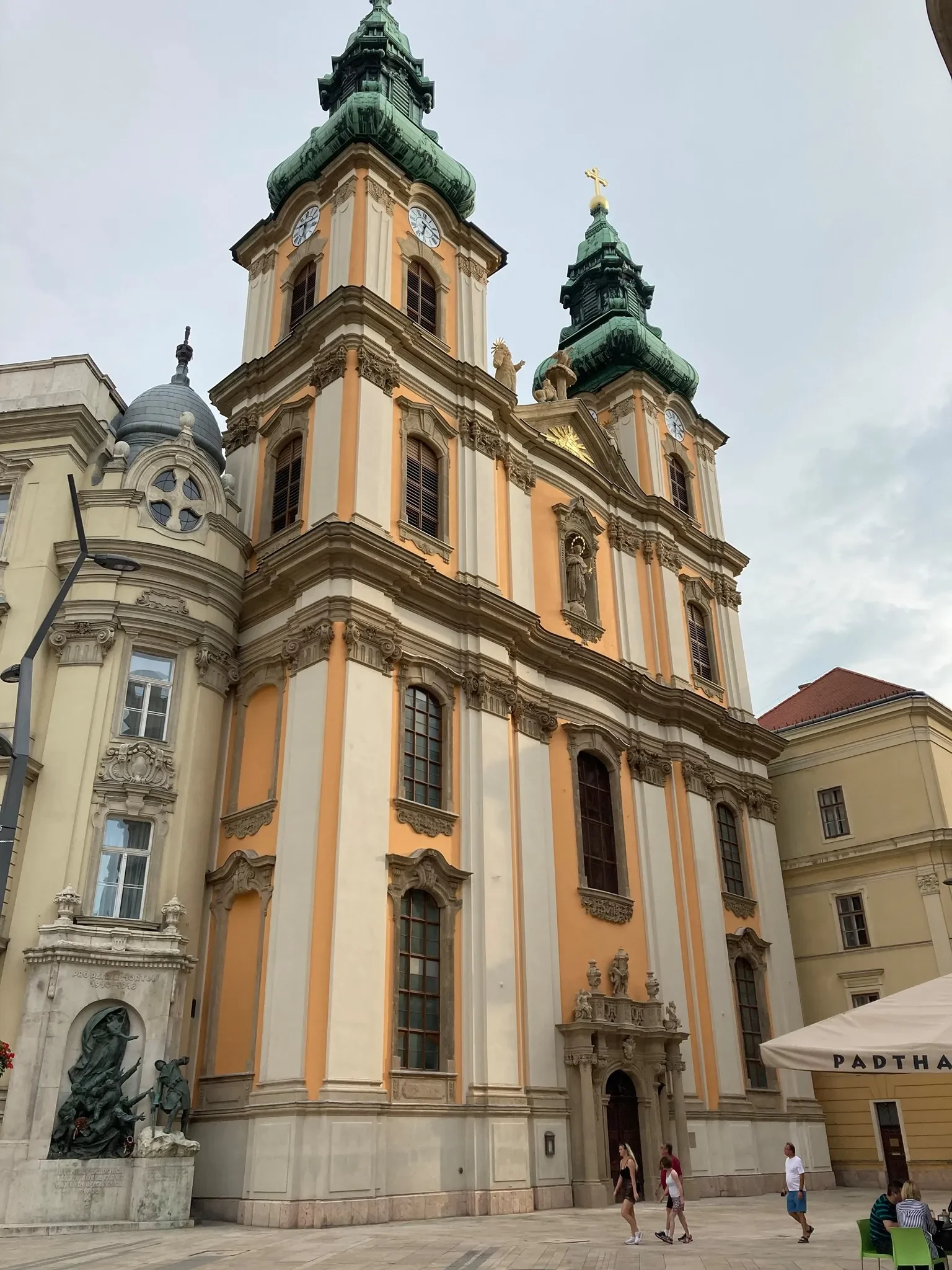
The University Church in Budapest. Photo via www.egyetemitemplom.com.
Interestingly, it was the Salzburg-born master-builder and architect András Mayerhoffer who became one of the prominent figures behind baroque-rococo architecture in Hungary. He designed the first twin-towered church in the country – the University Church in the fifth district – completed in 1742. It was thanks to him that this two-tower feature of Catholic churches became so popular in Hungary. Before that, the single-tower church was the norm.
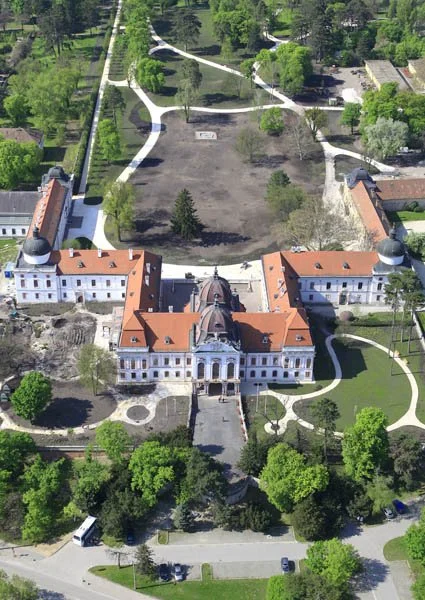
Royal Castle of Gödöllő. Photo via Wikipedia.
Gödöllő
Mayerhoffer was given citizenship in Buda and established a family there while working on other major architectural projects. He was commissioned by his patron, Count Antal Grassalkovich, to build the Royal Castle of Gödöllő, located outside of Budapest.
Completed in stages after 1735, it is the largest baroque building of its kind in Hungary and was gifted in 1867 to Franz Joseph I and Empress Elisabeth (Sisi) upon their coronation. The castle would become a favourite royal residence for Sisi especially, a place where she regularly escaped from the Viennese court.
Mayerhofferwas the creator of this Grassalkovich or “Gödöllő style”, characterised by a symmetrical, U-shaped complex. It has become known as typifying the way Baroque is done in Central Europe.
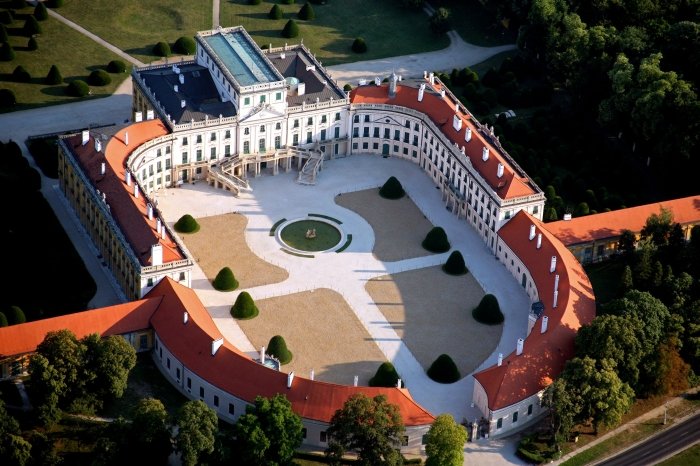
Eszterházy Palace in Fertőd. Photo via Wikipedia.
Fertőd
Located near the Austrian border, Esterházy Palace is a lavish 126-room complex that is often referred to as the "Hungarian Versailles". With its very own on-site opera house – where Joseph Haydn spent time as director – it’s the largest baroque palace in Hungary, featuring ceiling frescoes and extensive, cultivated gardens.
Envisaged by Prince Miklós Eszterházy, it was built near the southern shore of the Neusiedler See (Fertő tó in Hungary), a vast lake that straddles the Hungarian-Austrian border. Despite its grandeur, the inspiration for the palace came from humble beginnings. Prince Miklós spent a lot of his time here in what was originally nothing more than a hunting lodge. But the man had big dreams–and funds–to build something quite spectacular.
He wasn’t deterred by set-backs, either. The swampy land upon which the lodge sat was considered a health hazard at the time. The Prince, and his team of architects (Johann Ferdinand Mödlhammer and Melchior Hefele) nevertheless persisted with construction, drawing inspiration from Vienna’s Schönbrunn Palace. The project was completed in 1784.
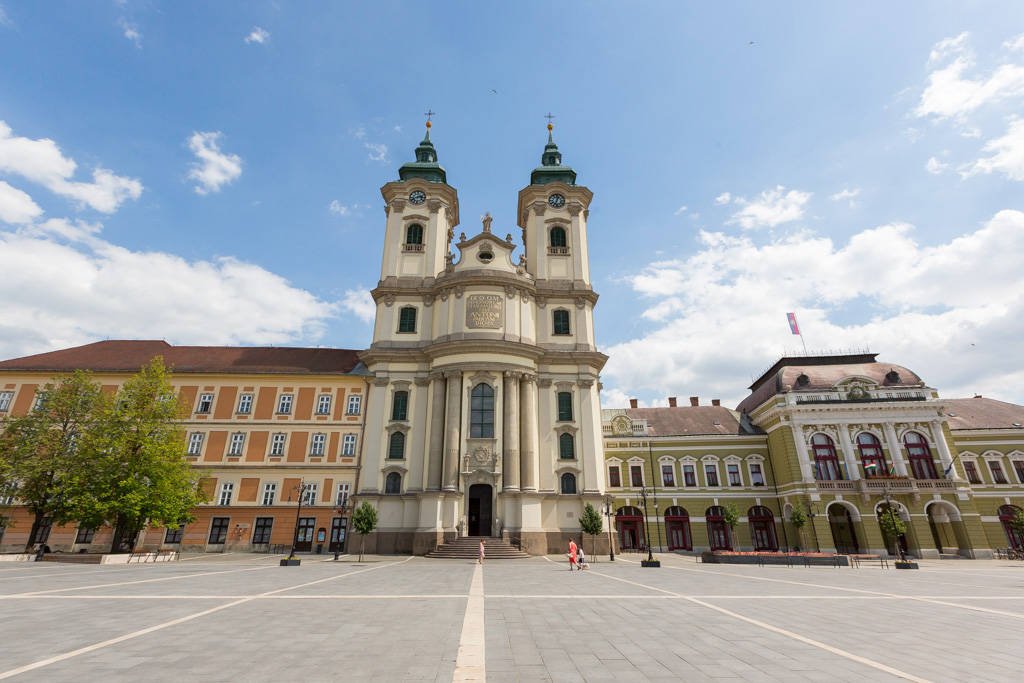
Minorite Church in Eger. Photo via Wikipedia.
The Cities of Eger & Győr
A city just north of Budapest dominated by Baroque style elements such as colourful houses, ornate wrought-iron balconies and curved church facades, Eger has become known as the “Baroque Pearl of Europe”. This is thanks to an 18th-century rebuilding boom following the Ottoman occupation.
Highlights include the Minorite Church (St. Anthony of Padua). Designed by architect Kilian Ignaz Dientzenhofer, it was consecrated in 1771 and is thought to be one of the most eye-catching Baroque churches in Central Europe. The Archbishop’s Palace is an example of late Baroque and is intricately decorated with rococo stucco.
Out west, Győr has the best-preserved Baroque city centre in Hungary as it remained largely untouched while much of the east of the country (including Budapest) was under Ottoman occupation.
Walking along cobblestone streets in the historic downtown area – much of which was already built by the mid 1600s – is like being in a living museum. There’s an abundance of wrought-iron shop signs, bay windows and ornamental buildings decorated with statues in alcoves.
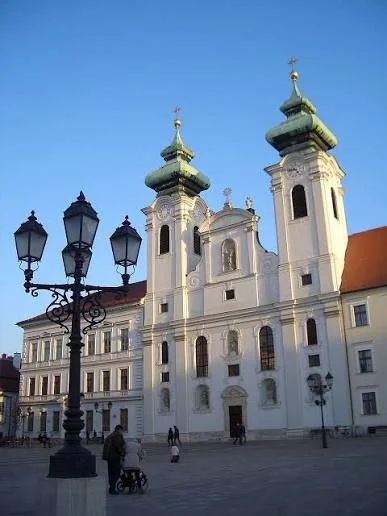
Church of Saint Ignatius of Loyola. Photo via Wikipedia.
Sources & further information
Church of Saint Ignatius of Loyola
Flatpack Films has years of experience servicing international brands, agencies, and production companies. Filming in Hungary is easy when relying on their knowledge of the market and ability to solve complex needs. They bring the best that Hungary has to offer in terms of unique locations, exceptionally skilled crews, top-of-the-line equipment and technical solutions. Backed by an impeccable track record, Flatpack Films has worked with world-class clients including Samsung, Samsonite, Toyota, Braun, Chivas Regal and many more.
Get in touch and learn more about Budapest film locations, Hungarian film incentives, film tax credits in Hungary and how Flatpack Films can bring your project to life through a highly bespoke approach.